News and Events
Cutting Edges Lisbon Workshop
October 2025

Bridging Virtual Production and Learning: Non-Linear Pedagogy in the Era of Artificial Intelligence.
The Lisbon Workshop, held from 21 to 23 October at Lusófona University, unfolded like a celebration of creative technology — a place where artistry, cinematography, and real-time visual production met in one joyful experiment.
Hosted in the heart of Lisbon’s academic and media hub, the event brought together filmmakers, visual effects artists, technologists, and educators to explore how virtual production is redefining the language of cinema.
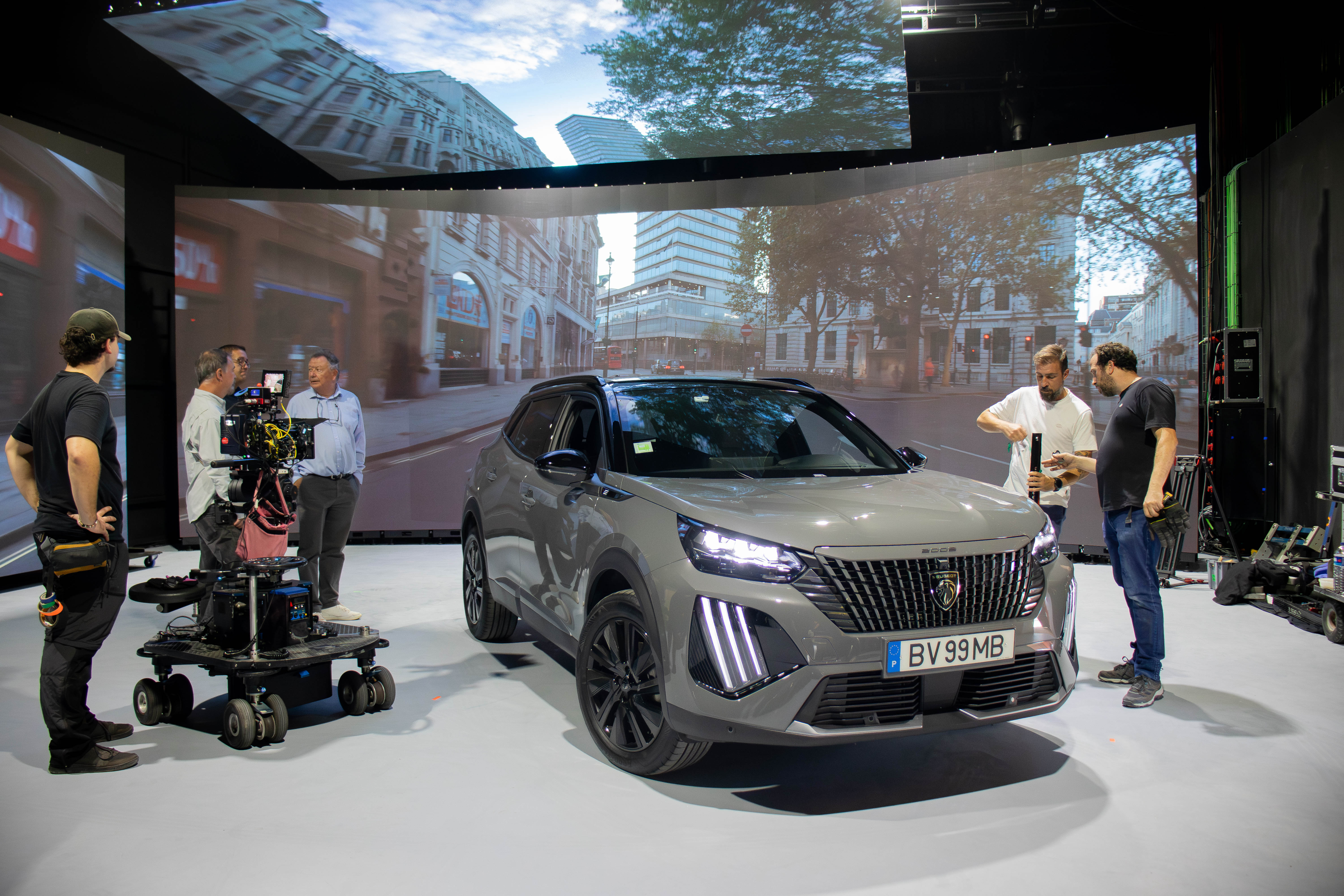
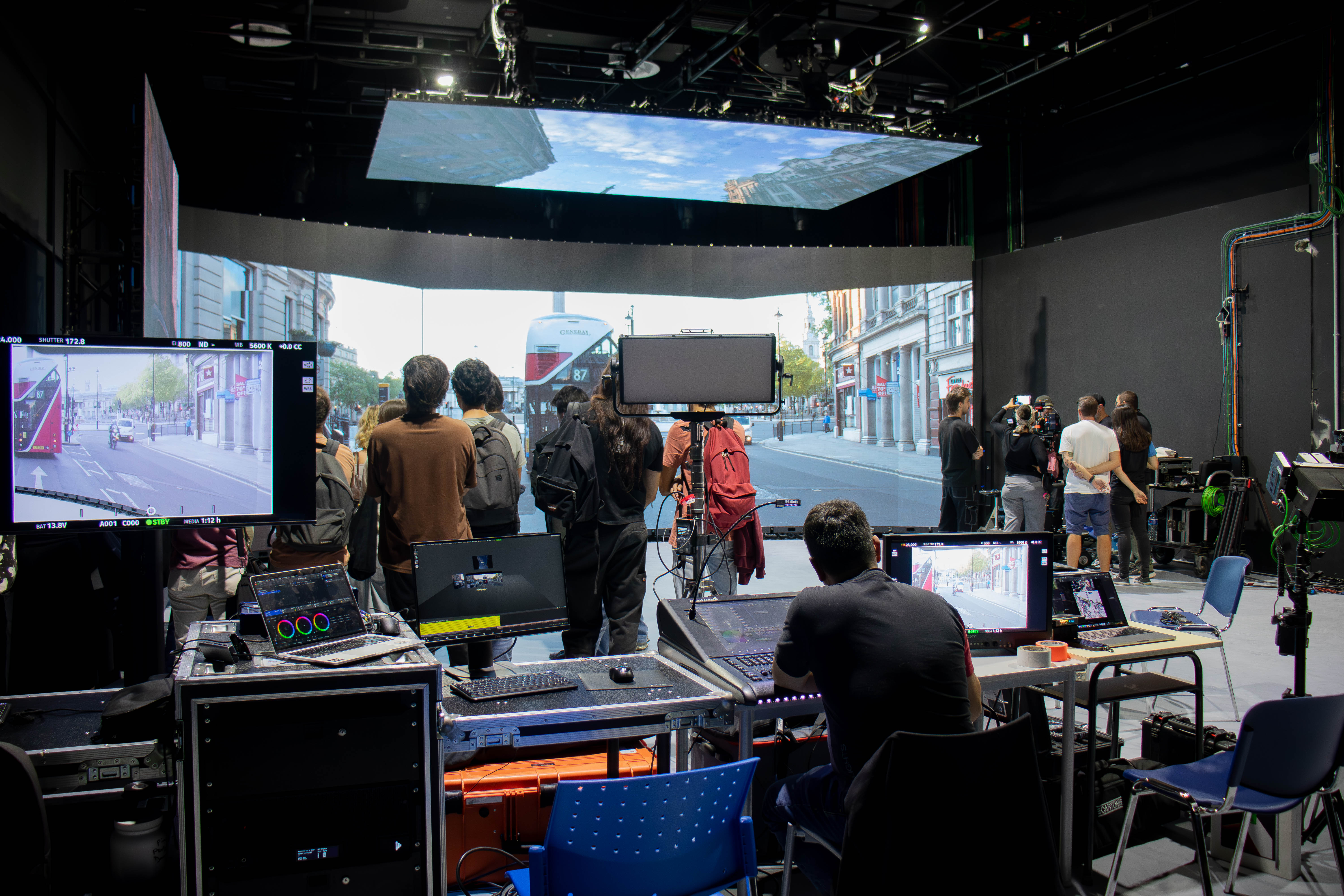
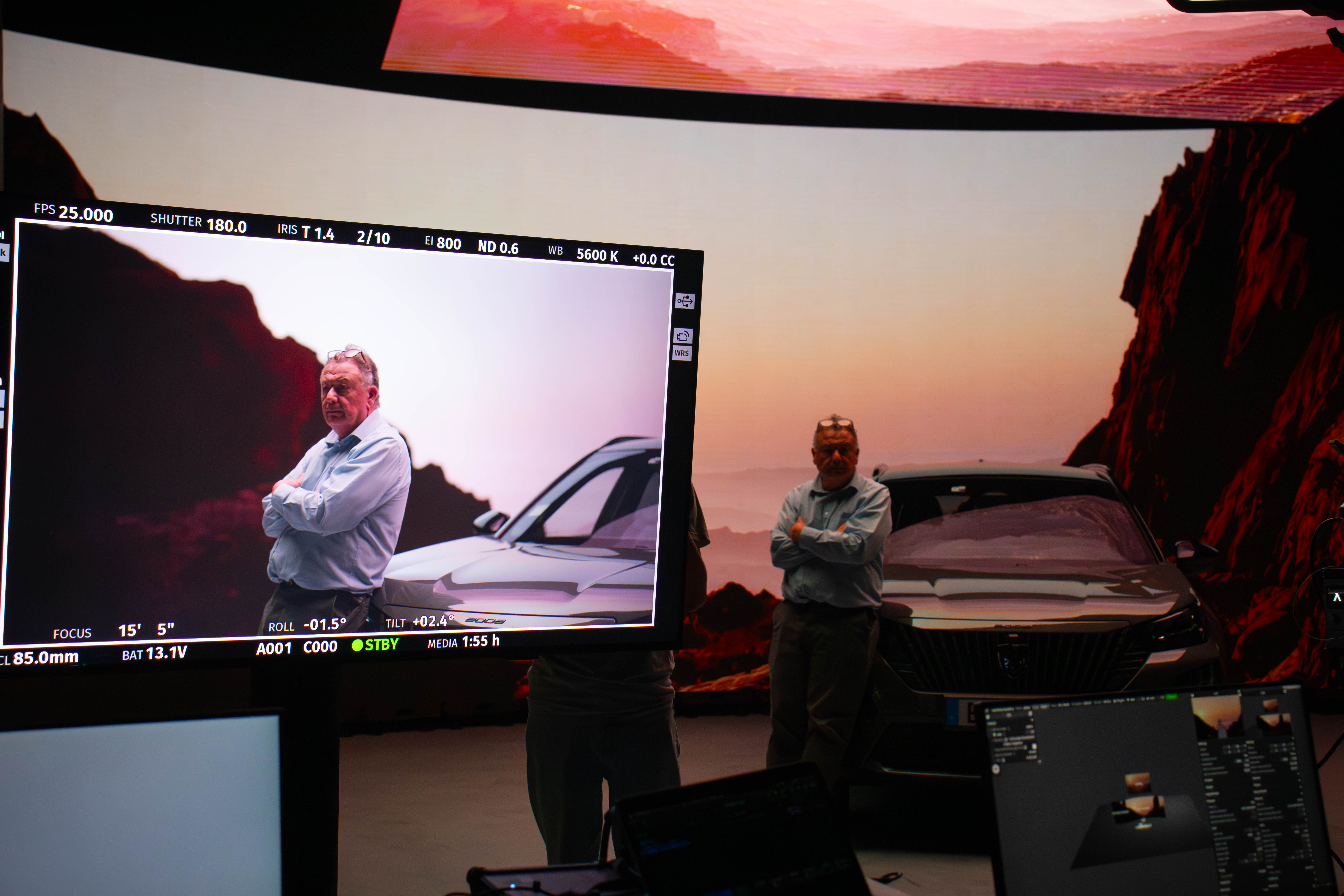
Over three vibrant days, participants dove deep into the workflows of the future. The sessions opened with explorations of 2.5D plates, images generated in Midjourney and refined in Photoshop — a hybrid process where AI imagination meets human composition. These digital canvases, layered with parallax cues, became testbeds for motion and lighting. Next came the 360° driving plates, filmed both day and night, used to create dynamic, immersive environments for in-camera VFX. Their seamless stitching, motion control, and LED wall playback enabled attendees to simulate driving scenes in controlled conditions, transforming a studio into a boundless cinematic landscape.
The workshop didn’t stop there. Future-facing sessions introduced Unreal Engine integration and Gaussian splatting, the next step in spatial imaging — a way to transform light fields into fluid, living 3D environments. These demonstrations were both poetic and practical, showing how filmmakers can now sculpt light and perspective as if painting in the air.
Hands-on experiences filled the room with energy. Attendees experimented with image-based lighting and learned to control metamerism, ensuring colors stayed true across different light spectra. They studied color calibration between LED walls, the Disguise as central brain bar hardware, and on-set cameras, discovering the delicate dance required to achieve visual harmony. Even the less glamorous challenges — genlock sync artefacts, Moiré patterns, or the nuances of camera tracking — became lessons in creative problem-solving, revealing how precision engineering underpins cinematic magic.
Central to the event were the companies and professionals who breathe life into these systems.
Disguise, represented by Nelson Pequeno (Disguise Regional Sales Manager), David Monguet (VP of supervision, MO&MO Film Services, Madrid) and Ruben Plaza Gracia (Virtual Production & LED Volume Specialist), showcased its hard- & software-agnostic “brain bar,” which empowers virtual sets to function seamlessly by integrating media servers, sync systems, and LED panels. FX Roads, led by Helibrando Videira, supplied the in-camera VFX rental systems that grounded the sessions in tangible experience — LED glow bouncing off metal, actors responding to projected worlds. Cinemate and Planar contributed dolly and lighting equipment, turning each setup into a professional-grade production floor.
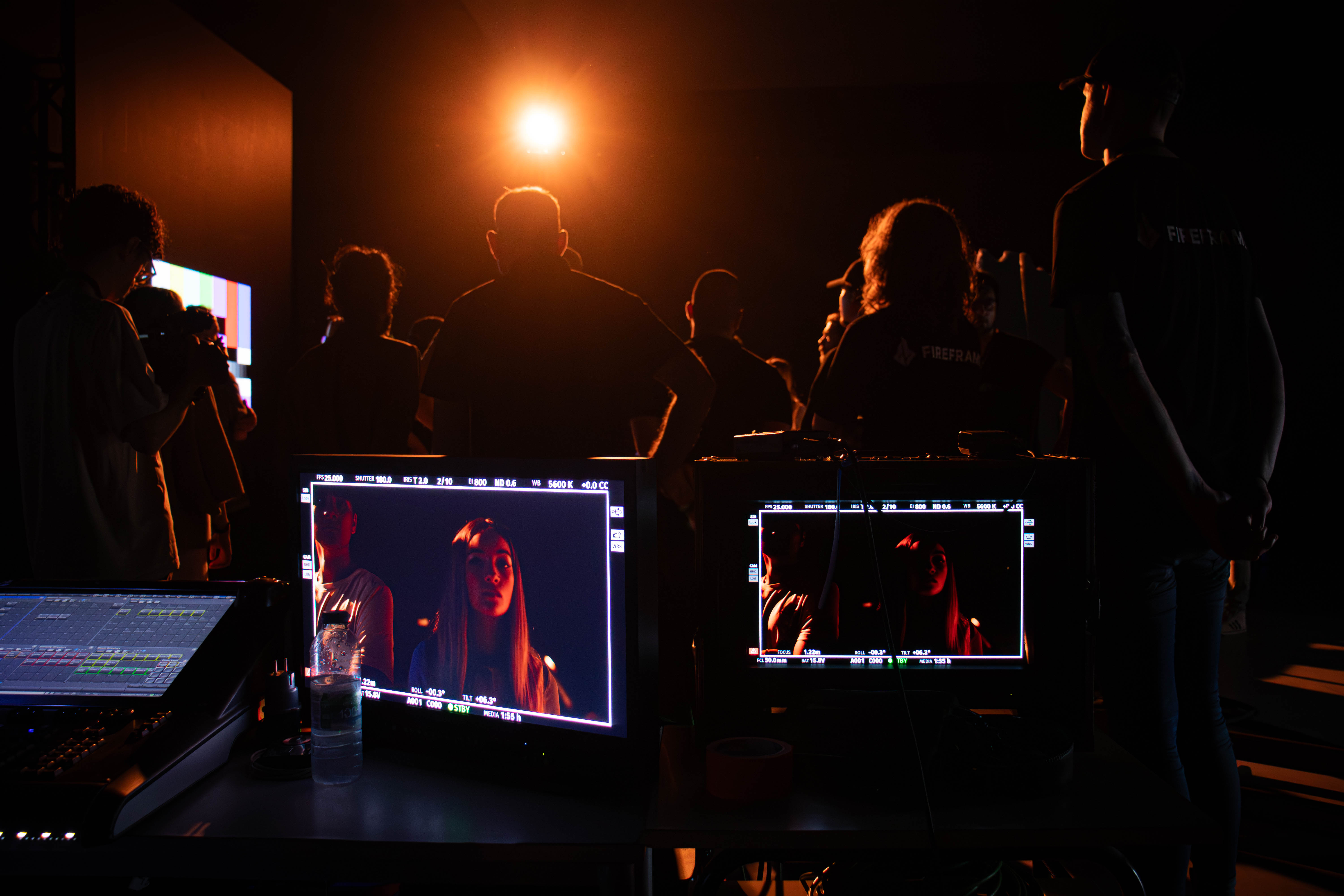
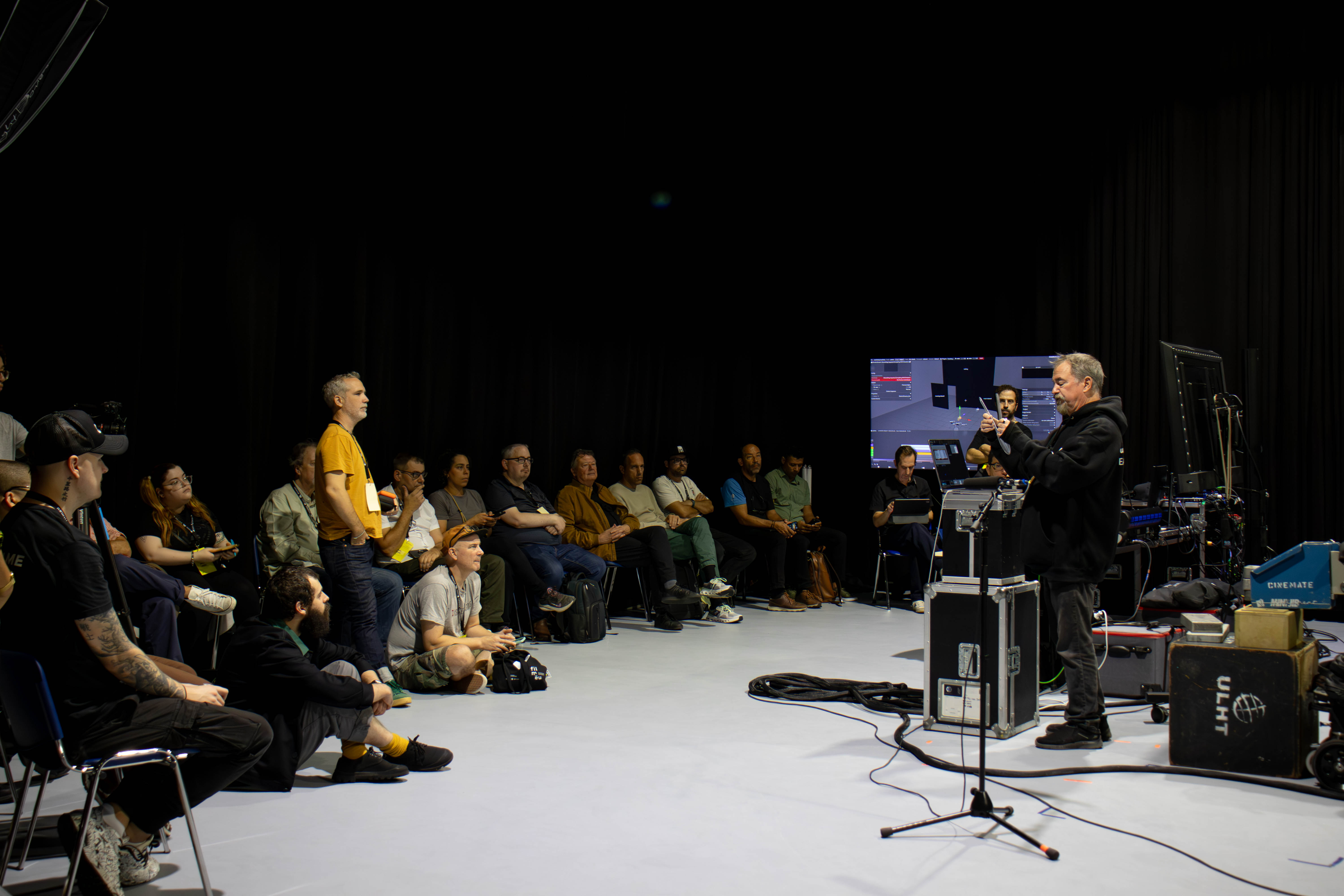
Throughout the workshop, expert interventions framed the practice within broader creative and pedagogical contexts. Tony Costa illuminated the cinematographic aspects of virtual sets — how to craft mood and realism under artificial light. Rodolfo Anes Silveira contextualized the broader scope of virtual production, describing an ecosystem where learning and creation coexist dynamically. He foregrounded the benefits of non-linear pedagogy and organized reflective sessions to explore its application in virtual production education. And David Stump, a master of VFX supervision and creative workflow design, inspired participants with his clarity on how technology can serve storytelling, especially through “similar screen”, without overshadowing it.
The atmosphere was one of optimism — a belief that technology, when wielded with artistry, can amplify human imagination rather than replace it. Between sessions, students and professionals shared insights on calibrating walls, aligning lenses, or syncing systems, yet the discussions always circled back to storytelling: how these new tools reshape narrative space, emotional tone, and even pedagogy.
By the final day, the stage had become a living metaphor for the medium itself — a dialogue between the physical and the virtual, between control and chance. Lisbon’s bright October light filtered through the studio windows as LED walls glowed in deep cinematic hues, bridging worlds in real time.
For a city steeped in light and history, this workshop marked a luminous step forward. It affirmed that virtual production is not just a technical evolution, but a cultural renaissance, one that redefines how we see, teach, and tell stories.
Article written by [Rodolfo Anes Silveira]
Rodolfo Anes Silveira is a Researcher at Universidade Lusófona and an Assistant Professor of Cinematography and Visual Effects at the University of Television and Film Munich (HFF). He holds a PhD in Media Arts and is pursuing a PhD in Web Science and Technology. His research explores virtual production, generative AI, immersive storytelling, and multisensory perception, with a focus on innovative pedagogies in media education.
Further reading and references:
- Lusofona University
- Disguise One – MGX Studios uses Disguise xR to shoot car-chase scenes
- Sim-Plates – The Future of Virtual Production Car Scenes
- Befores & Afters – The Art of Shooting Array Plates
- Sony Pro – Virtual Production and Rear Projection Evolution
- David Stump - Comandante – the data-driven workflow
- Data Color - What is Metamerism?
- 3D Gaussian Splatting for Real-Time Radiance Field Rendering
Watch the video: