Blogs
Tomorrow’s Screen: The Future of Virtual Production
September 2025

Virtual production, once a futuristic concept seen in films like Avatar with its real-time CGI previews, is now evolving fast, promising new ways to craft media.
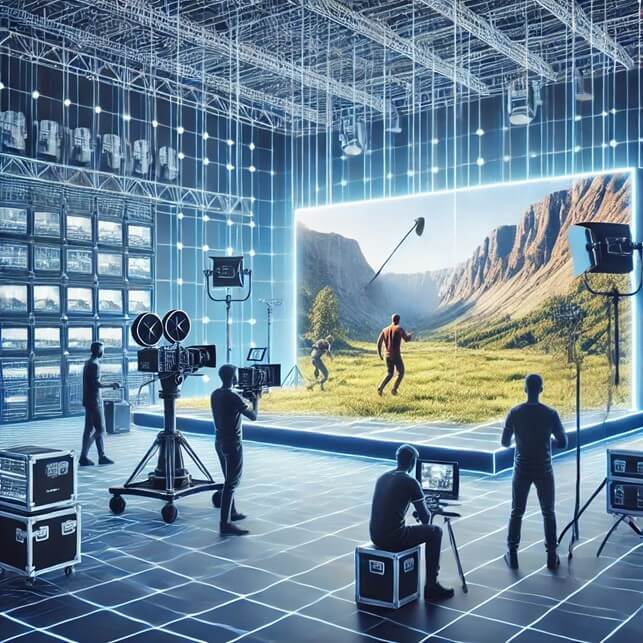
Virtual production is set to change how media appears on screen, merging physical and digital elements in new ways. The Cutting Edges project contributors offer ideas about where this technology is headed, from practical tools to wider uses.
John Buckley at IADT and Bruno Nunes of FX Roadlights see tools like Unreal and Unity engines advancing rapidly. “The future of virtual production is truly exciting,” Buckley says, pointing to AI-assisted set design and LED walls for “far more immersive and immediate productions,” while Nunes predicts “dependence on this technology will grow as quality and spectacle improve.” Arthur Reinhart of Łódź Film School takes it further, imagining “filming a sunset anytime, pausing it, or rewinding it,” reflecting on a working in virtual studio. Marko Luukkonen from Turku adds that “games and films are converging technically, visually, and sonically,” suggesting new roles like virtual set designers.
Cost remains a challenge
Buckley hopes “hardware costs would drop, and affordable camera tracking systems would become available soon,” a concern echoed by Manuel Ciantar of Studioseven, who expects wider use in education and corporate communication as prices fall. Tony Costa of Lusófona University flags technical challenges like moiré effects and tricky lighting, yet he’s optimistic: “It’s developing constantly, offering better solutions.”
Expanding applications: From healthcare to live events
The scope could widen beyond entertainment. Veerle Van der Sluys of FilmEU suggests it “won’t replace traditional methods but will coexist, offering new opportunities” in fields like healthcare, while Ciantar sees it enhancing events. Luukkonen imagines a “virtual replica of the entire world” for limitless filming locations. Costa adds a human angle, hoping it “could offer better, more humane working conditions” against the industry’s long hours.
Training will need to keep up. Buckley advises studying 3D or VFX, Nunes urges “learn by doing,” and Luukkonen sees energy use as a challenge offset by less travel. Ciantar predicts “as expertise grows and technology advances, the possibilities will only widen.” The field moves toward a future where technology and creativity combine to shape what we see on screen.