AI and Copyright: Protecting Human Creativity under New EU AI Regulation.
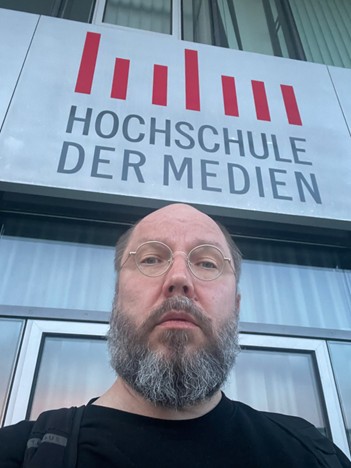
Reality Check Conference 2025 – Visual Media Lab, HdM, Stuttgart, Germany.
The rapid development of AI solutions has brought significant challenges for creative professionals, particularly regarding copyright and content protection.
AI's ability to process and utilize vast amounts of material — often without the creators' permission — has raised increasing concerns about how human-generated content can be fairly safeguarded in this evolving landscape.
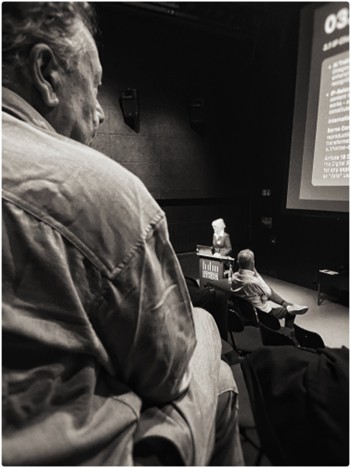
At the Reality Check Conference 2025 in Stuttgart, lawyer Christina Busch addressed this timely topic in her presentation. At the heart of her talk was the EU AI Act, introduced in August 2024. While the legislation does not directly regulate the protection of creative work, it includes key obligations and provisions related to it.
Specializing in AI and copyright, Christina Busch highlighted the most essential points from the EU AI Act:
• Providers of general-purpose AI models must comply with EU copyright laws and honor any rights reservations.
• Those training AI models are required to publish a summary of the content used in AI training, based on a template provided by the AI Office.
Busch also pointed out several critical weaknesses in the current regulatory framework:
• Lack of enforcement: Mechanisms for implementing the AI Act are still underdeveloped.
• Insufficient protection for creatives: Existing regulations fail to provide comprehensive safeguards against the misuse of creative content.
• Unclear communication and guidelines: The Code of Practice proposed by the EU AI Office is too vague.
• Delayed implementation: The regulation will not be fully enforceable until 2026, leaving creators exposed during the transition period.
In her presentation, Christina Busch emphasized that while the EU AI Act marks an important step in AI regulation, it is not yet sufficient to ensure fair protection for creators. In particular, professionals working in visual media, music, and literature urgently need clearer rules and stricter protections regarding how AI systems can use their content.
Hosted at Hochschule der Medien (HdM) in Stuttgart, the Reality Check – Visual Media Lab Conference provided an important platform for discussing how human creativity can be protected in the midst of technological transformation — a topic that continues to grow in relevance as AI capabilities advance.
This conference excursion was part of a series of visits organized within the Cutting Edges EU project, designed to strengthen professional skills and networks across Europe.
The excursion was part of the Cutting Edges EU project’s series of visits aimed at strengthening expertise and networks.
The author of the article, Marko Luukkonen, is a Senior Lecturer in Film department, a specialist, and a member of the Film and Media Research Group at the Arts Academy of Turku University of Applied Sciences (TUAS), Finland. His interests lie in the methods and meanings of image-creation.
Further information:
• Visual Media Lab Conference (VMLC) 2025 – Visual Media Lab
• Hochschule der Medien (HdM)
• Dr. Christina Busch – Jufresa y Grasas, abogados penalistas